TKGS+ Overseas Learning Journeys 2026: Learning Beyond Borders
26 October 2026
Written by Kyra Tan Yu Tong (3R1), Anika Kani (3H4), Sruthikha Saravanan (3R1) & Sevugarajan Brinda (3R1)
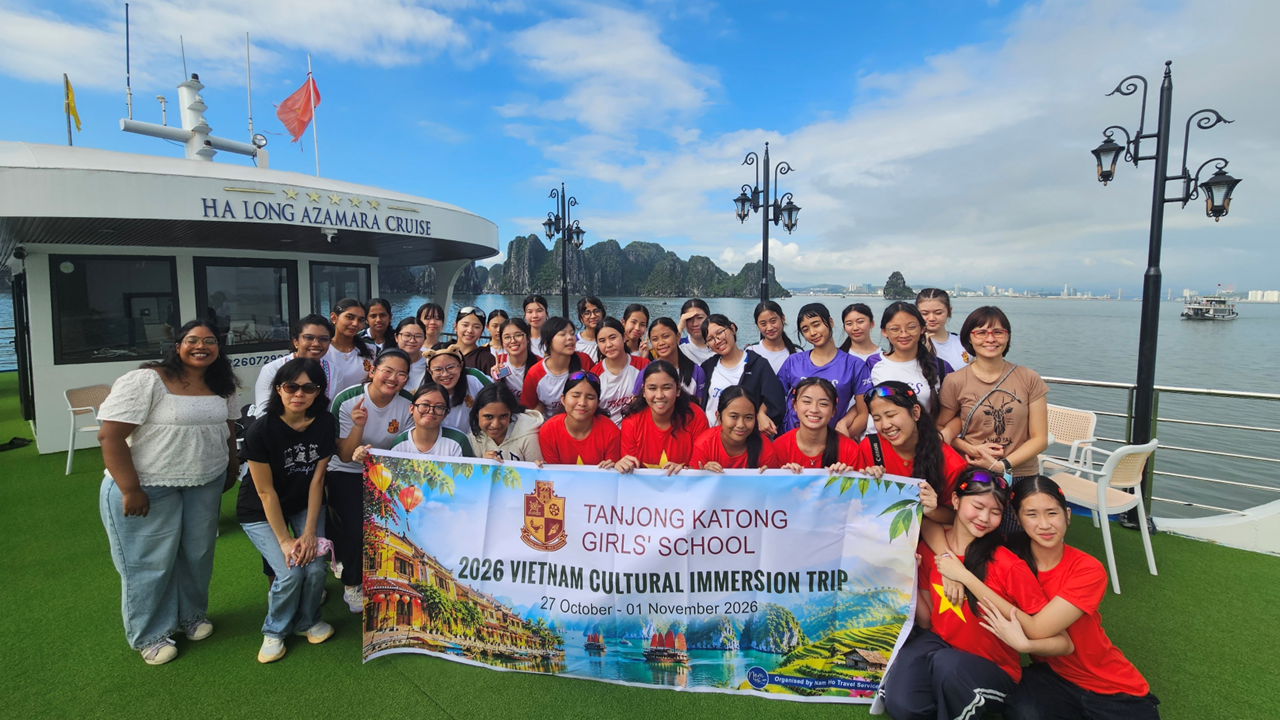
Through our Secondary 3 TKGS+ Programme, we have been learning about systems thinking — understanding how people, communities and environments are interconnected, examining issues from different perspectives and recognising the wider impact of our decisions. We also learnt how to apply these ideas by developing social impact initiatives that can make a positive difference in our communities.
In October, we had the opportunity to take our learning beyond the classroom through overseas learning journeys to China and Vietnam. These experiences allowed us to see how the concepts we had learnt in TKGS+ could be applied in real-world contexts, while broadening our understanding of different cultures and communities.
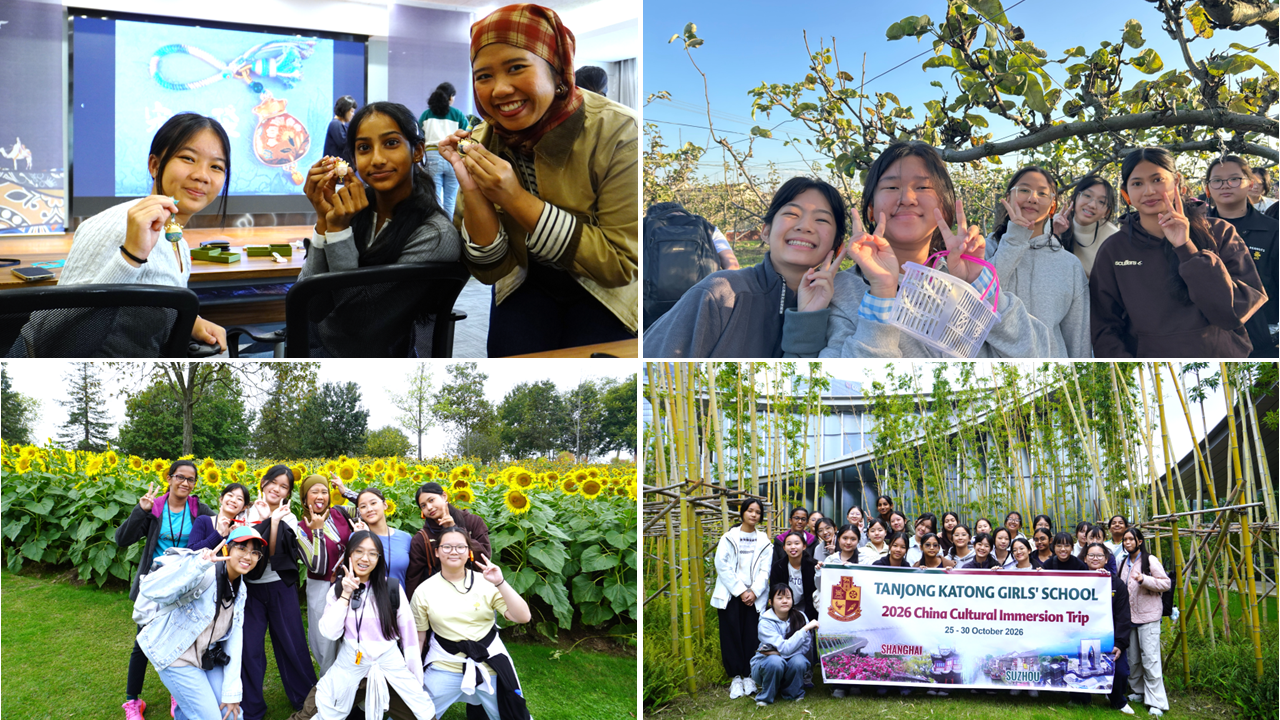
In Suzhou, we participated in a tea appreciation ceremony, made Song Brocade pendants at the Silk Museum and explored the historic Pingjiang Road. At Taihu Lake, we conducted water quality tests and learnt about wetland conservation, while visits to a citrus orchard and the Singapore-Suzhou Industrial Park (SSIP) introduced us to sustainable agriculture and international collaboration.
A highlight was our visit to Suzhou Listener Cafe, a social enterprise that provides employment opportunities for persons with disabilities. We tried latte art with the guidance of the baristas and learnt how inclusive workplaces empower individuals.
Our visit to SSIP also helped us recognise how countries are interconnected through economic partnerships and globalisation. “The experience helped me connect what I had learnt in Geography and Social Studies to real-world developments,” reflects Marissa Wong (3G7).
In Shanghai, visits to Chenshan Botanical Garden, the Shanghai Automotive Museum and Shanghai Romance Park broadened our understanding of conservation, innovation and Chinese history. We also explored technological developments at Huawei's R&D Centre and reflected on the city's multicultural heritage at the French Concession.
These experiences encouraged us to appreciate different perspectives and recognise the connections between heritage, sustainability, innovation and society.
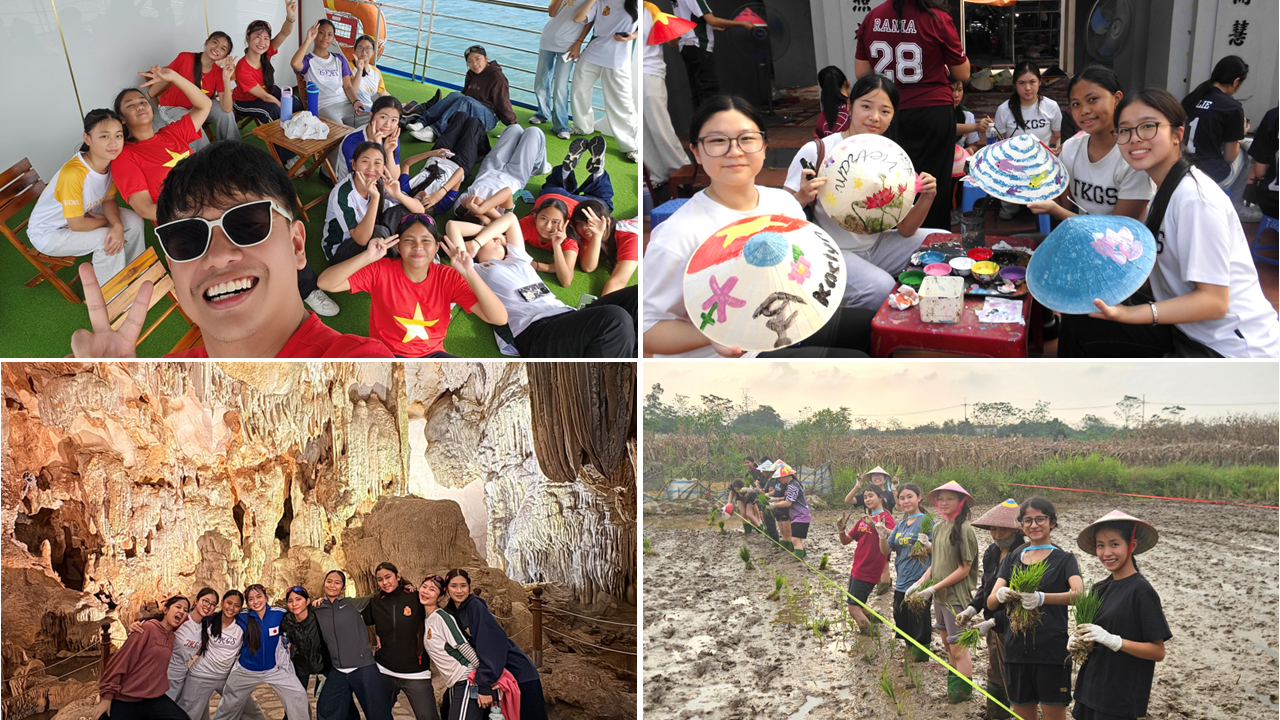
In Hanoi, our trip was about much more than just sightseeing. It was a chance to bring our learning to life. By visiting museums, historical sites, and local communities, we explored Vietnam’s rich past up close. Seeing real historical artefacts gave us unique perspectives on the Vietnam War beyond what textbooks teach, helping us understand how past conflicts and colonisation can shape a modern country.
We also immersed ourselves in local culture through hands-on activities like making traditional conical hats, watching a water puppet performance, and trying our hand at farming. Working directly with locals gave us a genuine appreciation for their crafts, traditions, and daily lives. These experiences helped us better understand and connect with another culture, showing what it truly means to be inquisitive learners.
A particularly meaningful part of our journey was visiting Vun Art and Kym Viet, two social enterprises that provide employment opportunities for persons with disabilities. We learnt how these organisations turn purposeful ideas into meaningful initiatives, creating inclusive workplaces where individuals can develop their abilities and contribute to society.
"I learnt so much through this trip, especially on how the social enterprises we visited brought their ideas to life to help the disabled people. This trip has also allowed me to learn more about Vietnam's history and culture that I otherwise would not know about if not for these valuable learning experiences,” reflects Eva Low (3R6).
Although our journeys took us to different countries, we returned with many shared lessons. From exploring heritage, sustainability and innovation in China to understanding history, culture and social inclusion in Vietnam, we learnt to look beyond familiar perspectives and recognise the connections between people, places and society.
Through our TKGS+ overseas trips, we have learnt that understanding the world is only the beginning. What truly matters is how we use that understanding to make a positive difference.